

Best Routes for Iceland Campervan Journeys
Best Routes for Iceland Campervan Journeys
Embarking on an Iceland campervan adventure is widely considered one of the ultimate travel experiences in the world. Exploring the "Land of Fire and Ice" on your own schedule allows you to chase the midnight sun, linger at thundering waterfalls long after the tour buses have departed, and wake up to unobstructed views of majestic glaciers. The sheer freedom of having your accommodation and transportation rolled into one vehicle makes a campervan Iceland journey incredibly appealing to independent travelers, photographers, and nature enthusiasts.
However, navigating the rugged terrain, unpredictable weather, and specific local regulations of this North Atlantic island requires careful planning. An impromptu road trip here is not quite the same as driving down a sunny coastal highway in California or Southern Europe. From understanding the strict environmental protection laws to knowing how to handle gale-force winds on coastal roads, preparation is the key to a safe and unforgettable trip.
This comprehensive guide will walk you through everything you need to know about planning your expedition, from choosing the right vehicle and understanding the logistics to mapping out the most spectacular driving routes the country has to offer.
Pre-Trip Essentials: Choosing Your Home on Wheels
The first and most crucial decision you will make is selecting your vehicle. The right choice depends heavily on your budget, your route, the time of year, and your comfort preferences. When looking into an Iceland camper rental, you will generally be faced with three categories: small sleeper vans, larger panel vans, and traditional motorhomes.
Starting with a sleeper van vs motorhome comparison can help narrow down your options. A sleeper van is typically a converted minivan or mid-sized commercial van. These are agile, easy to park, and significantly less susceptible to being pushed around by severe crosswinds. They usually feature a fold-out bed, a portable gas stove, and a small electric cooler. They are ideal for solo travelers or couples who prioritize mobility and budget over luxury. A motorhome, on the other hand, provides standing room, indoor plumbing, a fixed kitchen, and a dining area. However, motorhomes are bulky, consume more fuel, and can be challenging to drive on narrow coastal roads or during high wind events.
If your itinerary involves venturing into the rugged interior of the country, standard two-wheel-drive vehicles will not suffice. The interior is accessible only via F-roads, which are unpaved, extremely rough mountain tracks that often feature unbridged river crossings. For these routes, renting a 4x4 sleeper for highlands access is absolutely mandatory by law. Rental companies will explicitly void your insurance and levy heavy fines if you take a standard two-wheel-drive campervan onto an F-road.
Navigating Logistics and Budgets
Iceland is notoriously expensive, and proper financial planning can make or break your trip. When calculating the average daily cost for an icelandic road trip, you must factor in the vehicle rental, premium fuel prices, daily campsite fees, food, and paid attractions. On average, budget-conscious travelers can expect to spend between $150 to $250 per person, per day, depending on the season and the size of the vehicle.
One of the most effective ways to manage your budget is to avoid eating out at restaurants. Making your own meals is a core part of the van life experience. As soon as you pick up your vehicle, prioritize budget grocery shopping near keflavik airport. Supermarkets like Bónus, Krónan, and Nettó offer the most affordable prices for staples like pasta, rice, skyr (traditional Icelandic yogurt), hot dogs, and coffee. Stocking up immediately saves you from relying on expensive remote gas station convenience stores later in your journey.
Insurance is another area where you should never cut corners. The volcanic landscape is beautiful but hazardous to vehicles. Standard collision damage waivers often do not cover the unique environmental risks found here. Upgrading your policy to include gravel protection and sand and ash insurance is highly recommended. Loose gravel from unpaved roads frequently kicks up and shatters windshields, while strong winds across the southern glacial outwash plains can whip up volcanic ash and sand storms capable of stripping the paint off a vehicle in minutes.
Rules of the Road and Campsite Etiquette
A common point of confusion for first-time visitors relates to where they can legally park and sleep. Many travelers ask: is wild camping legal in iceland? The definitive answer is no. In 2015, the government passed strict conservation laws to protect the island’s incredibly fragile moss and ecosystems from over-tourism. It is entirely illegal to park and sleep in a van outside of designated campsites.
This brings us to the overnight parking regulations for converted vans and motorhomes. You cannot legally spend the night in roadside lay-bys, national park parking lots, supermarket lots, or private farmland without explicit permission. You must utilize the nationwide network of designated campsites. Fortunately, the country is incredibly well-equipped for this, boasting over 170 registered campsites scattered across every region.
During the busy summer months, you might wonder how to book icelandic campsites in advance. In reality, the vast majority of campsites operate on a first-come, first-served basis and rarely fill up to the point of turning smaller vans away. However, you can use digital platforms like the Parka app to pay for many sites digitally, or purchase the Campingcard, which covers the overnight fees for a specific network of sites.
After a long day of hiking through misty canyons and volcanic craters, a hot shower is a necessity. Some facilities are rudimentary, offering just a flat field and a cold-water sink, while others are essentially outdoor resorts. If comfort is a priority, seek out the best campsites in iceland with showers, heated drying rooms, and indoor communal kitchens. Notable spots include the Skógar campsite right beneath the famous waterfall, the Egilsstaðir campsite in the east, and the fully equipped Grindavík campsite (subject to current volcanic activity in the Reykjanes peninsula).
Safety, Weather, and Power Management
The natural elements dictate everything in this country. The weather changes incredibly fast, and what starts as a sunny morning can quickly devolve into a torrential horizontal rainstorm.
Monitoring the weather is your most critical daily task. You must habitually check for icelandic met office wind speed alerts on the official website (vedur.is) or app. Wind is the most dangerous element for high-sided vehicles. When wind speeds exceed 15 meters per second (approx. 33 mph), driving a large motorhome becomes hazardous; anything above 20 m/s means you should pull into a sheltered spot and wait out the storm to avoid being blown off the road.
If you are planning to travel between October and April, adhering to winter road trip safety tips iceland locals swear by is essential. Ensure your rental company has fitted your van with studded winter tires. Be prepared for very limited daylight hours—sometimes as few as four hours in December—and constantly monitor road.is for sudden road closures due to black ice or impassable snowdrifts.
Living in a van also means managing your resources carefully. Understanding how your vehicle's power system works is vital. Managing auxiliary battery and charging devices effectively ensures you stay warm through the night. Most modern rentals use a dual-battery system where the auxiliary "leisure" battery powers your lights, refrigerator, and the overnight Webasto heater. This battery charges while the engine is running. Therefore, you need to drive for at least a few hours each day to replenish it, or alternatively, plug into a 220V electrical hookup at a campsite.
Finally, packing appropriately will drastically improve your comfort. An essential packing list for icelandic camping should include thermal base layers, waterproof pants, a windproof and waterproof shell jacket, sturdy hiking boots, and a warm hat and gloves, regardless of the season. If your van does not include premium bedding, ensure you request sleeping bags rated for freezing temperatures. Leave the umbrella at home; the wind will destroy it immediately.
Timing Your Trip
The experience of living in a van varies wildly depending on the season. The best months for van life in iceland are undeniably June, July, and August. During the peak of summer, you will experience nearly 24 hours of daylight, allowing you to drive and explore late into the evening. The temperatures are mild (ranging from 10°C to 15°C / 50°F to 59°F), and all roads, including the highland F-roads, are fully accessible.
September and May offer beautiful shoulder-season travel with fewer crowds and lower rental prices, though the weather becomes significantly more unpredictable. Winter travel in a campervan is possible but is strictly for adventurous, highly experienced drivers who are prepared to spend long, dark, freezing nights in their vehicle and have flexible itineraries that can accommodate sudden blizzards.
The Best Routes for Your Journey
Once your logistics, budget, and safety protocols are established, the most exciting part begins: mapping out the drive. The country’s road network is surprisingly simple, yet it offers access to some of the most dramatic landscapes on Earth. Depending on your timeframe, here are the best routes for your road trip.
Route 1: The Classic Ring Road (Route 1)
The undisputed king of Icelandic road trips is the Ring Road, officially known as Route 1. This 1,332-kilometer (828-mile) paved highway completely encircles the island, offering a comprehensive tour of the country's diverse geographical features. To comfortably complete this route without feeling rushed, you should allocate a minimum of 7 to 10 days.
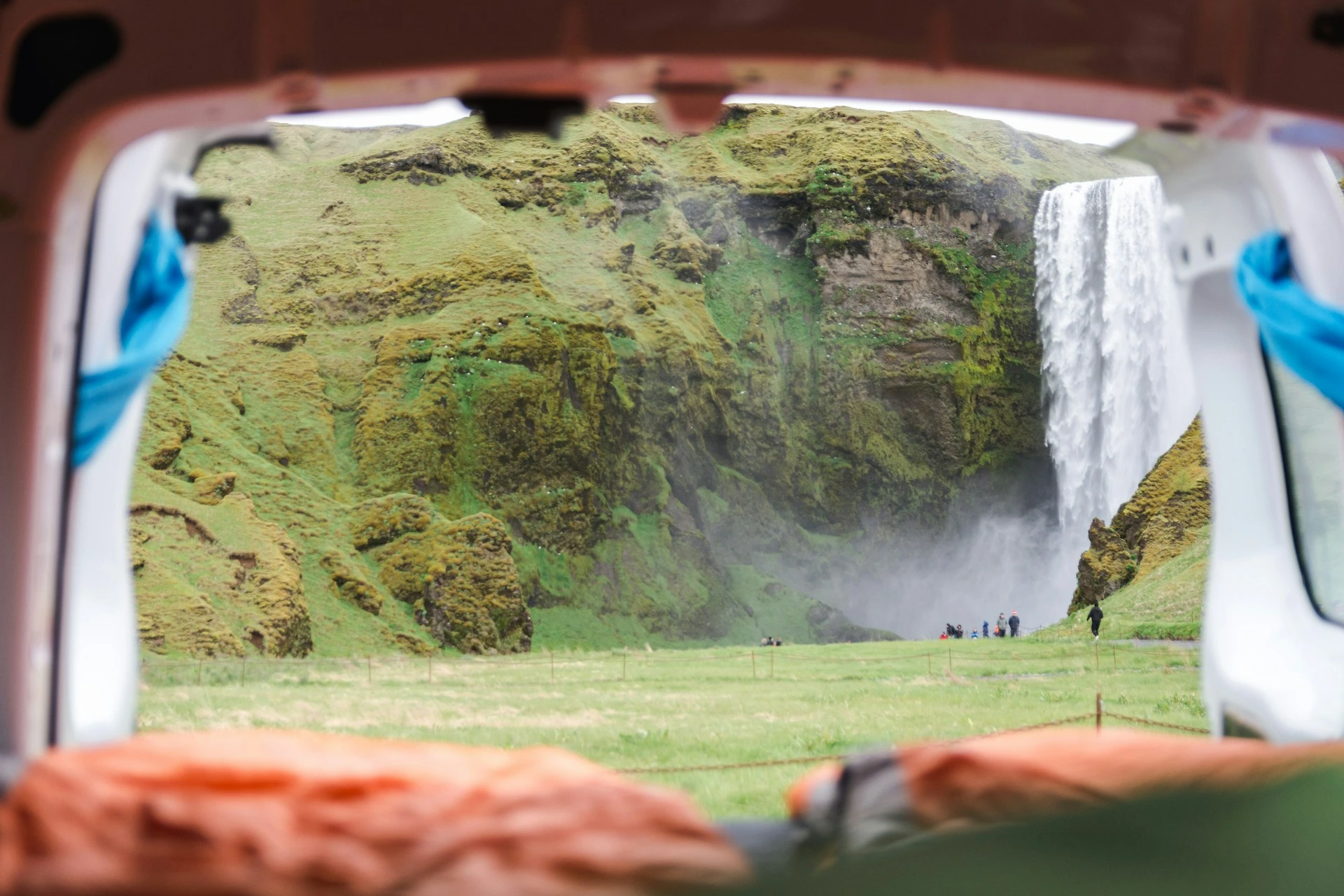
Driving the ring road in a motorhome is generally smooth and highly recommended, as the vast majority of Route 1 is fully paved, two lanes wide, and well-maintained. The journey usually begins by heading southeast from Reykjavik. The South Coast portion of the Ring Road is heavily populated with iconic sights. You will pass the towering Seljalandsfoss and Skógafoss waterfalls, the eerie black sands of Reynisfjara beach near Vík, and the surreal blue icebergs floating in the Jökulsárlón Glacier Lagoon.
As you curve around into the East Fjords, the landscape transforms drastically. The roads begin to weave tightly along steep, jagged coastlines, passing through quiet fishing villages like Seyðisfjörður. This region is less visited than the south, offering profound silence and the chance to spot wild reindeer wandering near the roadside.
Continuing north, the geological activity kicks into high gear. The Lake Mývatn region is a geothermal wonderland featuring bubbling mud pots, steaming fumaroles at Námaskarð, and expansive lava fields. From there, you head toward Akureyri, the "Capital of the North," before cruising down the western side of the country through the rolling farmland of Skagafjörður, eventually completing the circle back to Reykjavik. Along the Ring Road, campsites are plentiful, gas stations are well-spaced, and the scenery changes drastically every few hours.
Route 2: The Golden Circle and the South Coast
If you only have 4 to 6 days for your Iceland campervan trip, attempting the entire Ring Road will result in a rushed and exhausting experience. Instead, focusing on the Golden Circle combined with the South Coast provides a dense concentration of spectacular sights with minimal driving time.
The Golden Circle is a short, 300-kilometer (190-mile) loop starting near Reykjavik. It highlights three major locations: Þingvellir National Park, where you can walk between the North American and Eurasian tectonic plates; the Geysir Geothermal Area, where the active Strokkur geyser erupts boiling water 30 meters into the air every few minutes; and Gullfoss, a massive, multi-tiered waterfall that plunges into a deep canyon.
After completing the Golden Circle, you can easily connect to Route 1 and head east along the South Coast. You can spend a few days exploring the glaciers, hiking in Skaftafell National Park, and enjoying the coastal cliffs before turning around and heading back to the capital. This route is highly accessible, heavily serviced with excellent campsites, and perfect for a first-time van traveler.
Route 3: The Snæfellsnes Peninsula
Often described as "Iceland in Miniature," the Snæfellsnes Peninsula in the west contains a sample of almost every natural feature the country is famous for—volcanoes, glaciers, lava fields, craters, waterfalls, and black sand beaches—all packed into a relatively small, 100-kilometer-long peninsula.
A thorough exploration of Snæfellsnes takes roughly 2 to 3 days, making it an excellent addition to a shorter trip or a peaceful detour off the main Ring Road. The peninsula's crown jewel is the Snæfellsjökull glacier-capped volcano, famous for being the setting of Jules Verne’s "Journey to the Center of the Earth."
Driving around the peninsula, you will encounter the iconic, arrow-shaped Kirkjufell mountain, one of the most photographed spots in the country. You can also explore the dramatic coastal cliffs at Arnarstapi, walk the black pebble beach of Djúpalónssandur, and view the striking black wooden church at Búðir. The roads here are mostly paved and easy to navigate, with several picturesque campsites situated right on the rugged coastline, allowing you to fall asleep to the sound of crashing ocean waves.
Route 4: The Wild Westfjords
For those seeking absolute isolation, untouched wilderness, and a true escape from the summer tourist crowds, the Westfjords region is the ultimate destination. Located in the far northwest, this massive peninsula features deeply carved, dramatic fjords and towering, flat-topped mountains. Only about 10% of visitors make it to the Westfjords, largely because the driving is slow, winding, and challenging.
You need at least 5 to 7 days to explore the Westfjords properly. The roads frequently switch from pavement to rough gravel, hugging the very edge of steep cliffs without guardrails. It is a thrilling drive that requires caution and patience.
The rewards, however, are immense. The region is home to Dynjandi, a breathtaking, bridal-veil waterfall that cascades down a terraced cliff face. The Westfjords also boast Rauðisandur, an unexpected expanse of red and golden sand beaches, and the Látrabjarg cliffs, Europe’s largest bird cliff and one of the best places in the world to observe nesting Atlantic puffins up close. Furthermore, the region is dotted with hidden, natural geothermal hot pots. Finding a remote campsite in the Westfjords often means having an entire fjord to yourself, offering a profound sense of peace.
Route 5: The Unforgiving Highlands
The Icelandic Highlands encompass the vast, uninhabited, volcanic desert interior of the island. This is a region of raw, untamed nature featuring colorful rhyolite mountains, expansive black sand deserts, and steaming hot springs.
As previously mentioned, accessing this region requires renting a specialized 4x4 sleeper van, as the F-roads are legally restricted to four-wheel-drive vehicles. The Highlands are only accessible during the core summer months (typically late June to early September), as heavy snow renders the roads completely impassable for the rest of the year.
A popular highland route takes you to Landmannalaugar, renowned for its brightly colored, painted mountains and natural geothermal bathing rivers. Another incredible highland destination is Askja, a massive volcanic caldera in the remote central-eastern highlands, accessible only via a long, demanding drive through a desolate, lunar-like landscape. Driving in the Highlands is an adventure in itself, often requiring you to carefully ford unbridged glacial rivers. It is imperative that you speak with your rental company and local rangers before attempting these river crossings, as water levels can rise rapidly and severely damage vehicles.
Final Thoughts
An Iceland campervan trip is more than just a vacation; it is an immersive journey into one of the most raw and geologically active environments on the planet. The flexibility to alter your itinerary based on the shifting weather, the thrill of waking up at the foot of a glacier, and the simple joy of brewing coffee in your rolling home while watching the morning mist clear over a fjord are experiences that stay with you forever.
By choosing the appropriate vehicle for your intended route, respecting the local environmental laws, monitoring the weather vigilantly, and budgeting smartly, you set the stage for a seamless adventure. Whether you choose to circumnavigate the entire island on the Ring Road, lose yourself in the remote beauty of the Westfjords, or simply enjoy the condensed wonders of the Snæfellsnes Peninsula, traveling by van provides unparalleled access to the magic of Iceland. Prepare thoroughly, pack wisely, respect the wild nature around you, and embrace the extraordinary freedom of the open road.